
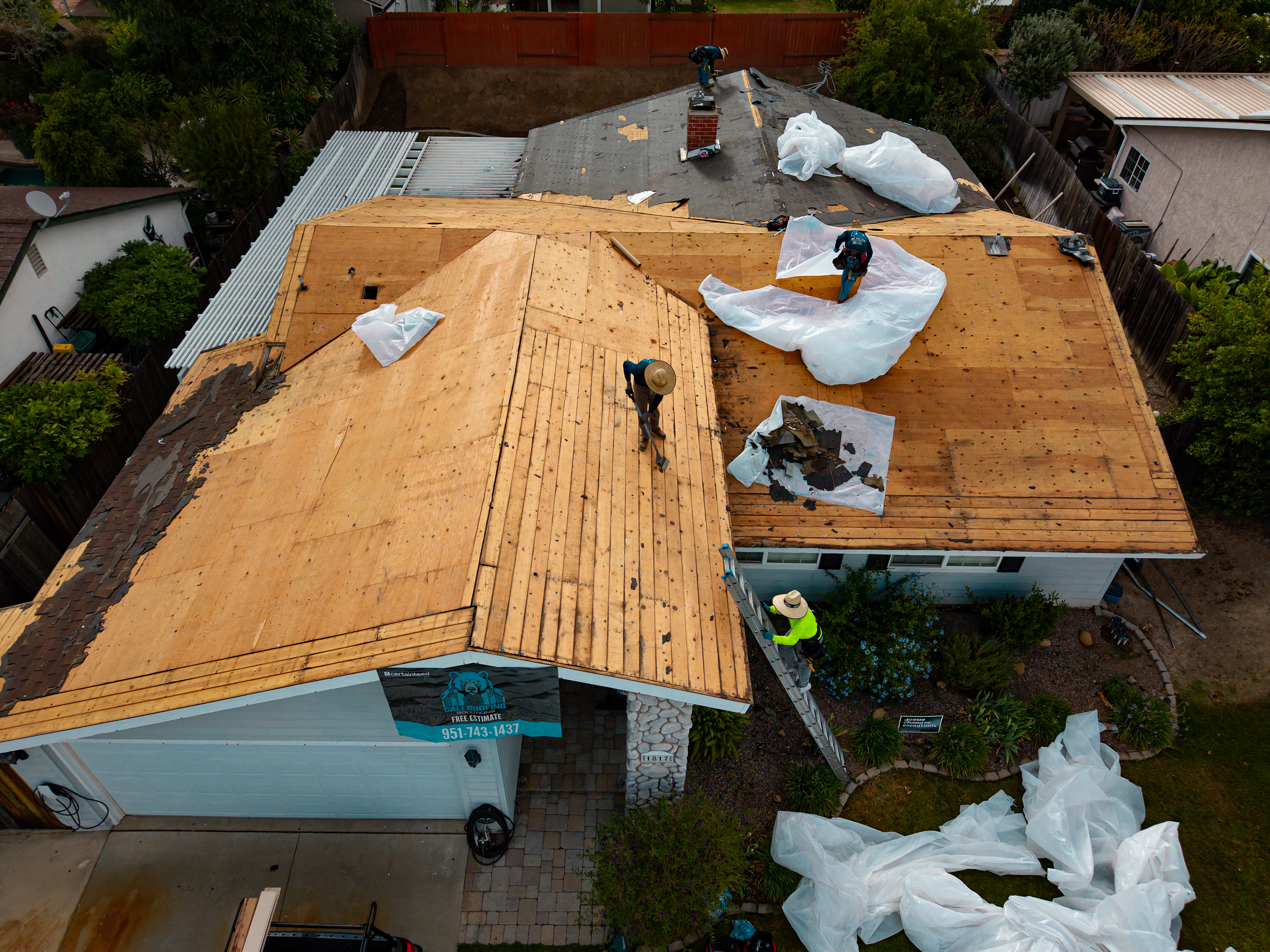
Laguna Beach occupies a position in Orange County’s residential landscape that is genuinely unlike any other city in the region. Carved into the coastal canyons and bluffs of the San Joaquin Hills where they meet the Pacific, its neighborhoods — Arch Beach Heights, Temple Hills, Top of the World, Mystic Hills, Bluebird Canyon, South Laguna, Emerald Bay, Three Arch Bay, Laguna Village, and the hillside communities above Coast Highway — combine the most dramatic coastal scenery in Southern California with some of its most complex and demanding residential terrain. Steep canyon slopes, direct Pacific Ocean exposure, California Fire Hazard Severity Zone designations across significant portions of the city, some of the most active Coastal Commission jurisdiction of any OC municipality, and a residential architecture ranging from original artist colony cottages from the 1920s to $15 million contemporary estates — all of this creates a roofing environment that demands expertise, preparation, and local knowledge that generic OC roofing guidance simply cannot provide.
Laguna Beach’s roofing decisions carry stakes that scale with the city’s extraordinary property values and its equally extraordinary environmental complexity. A roofing failure on a $4 million Arch Beach Heights home with ocean views does not produce consequences proportional to a $600,000 Anaheim ranch home. It produces water damage cascading through premium interiors, potential Coastal Commission compliance complications, insurance difficulties in a market that has become increasingly challenging for coastal cliff and canyon properties, and transaction complications in a real estate market where sophisticated buyers examine roofing documentation with unusual care.
We are Cali Roofing Solutions — a family-owned GAF Master Elite®️ and CertainTeed SELECT ShingleMaster™️ Premier certified roofing contractor based in Corona, CA, serving Laguna Beach and all of Orange County and greater Los Angeles. We back every project with a 30-Year Labor Warranty and 50-Year Material Warranty. This guide addresses the roofing realities of Laguna Beach specifically — because this city’s combination of terrain, regulation, coastal environment, and property values creates a roofing context that deserves its own comprehensive guide.
The Five Forces That Define Laguna Beach Roofing
Laguna Beach’s roofing environment is shaped by five distinct forces that each carry significant weight individually and that collectively create the most complex and demanding residential roofing context in Orange County.
Force 1: Direct Pacific Ocean Exposure at Multiple Elevations
Unlike Huntington Beach — where coastal influence diminishes measurably as distance from the water increases — Laguna Beach’s topography creates coastal exposure at elevations far above sea level that is as intense as beachfront exposure in flatter coastal cities. The canyon and hillside terrain that gives Laguna Beach its dramatic character also channels marine air directly up canyon walls and across hillside properties that sit 200, 400, and 600 feet above sea level — properties that experience salt air concentration approaching what beachfront properties face, because the terrain eliminates the distance-based attenuation that typically moderates salt air with inland progression.
The practical roofing implication: marine-grade material specifications are appropriate for virtually every Laguna Beach residential property regardless of specific elevation or nominal distance from the water. The coastal specification that might be optional for properties more than a mile from the coast in a flat coastal city is a baseline requirement throughout Laguna Beach’s residential areas given the topographic concentration of marine air that the city’s terrain creates.
Force 2: Fire Hazard Severity Zones and Wildland Interface
Laguna Beach is surrounded by wildland open space — the Laguna Coast Wilderness Park, the Aliso and Wood Canyons Wilderness Park, and the interconnected open space corridors of the Crystal Cove State Park system create a wildland-urban interface throughout the city’s perimeter neighborhoods that carries California’s highest Fire Hazard Severity Zone classifications. The 1993 Laguna Beach Fire — which destroyed more than 300 homes across the city — and subsequent fire events throughout the surrounding canyon system have made fire risk not a theoretical concern but a documented, experienced reality for Laguna Beach homeowners.
The ember intrusion mechanism that drives residential fire losses in California’s wildland interface affects Laguna Beach with particular force during Santa Ana wind events — the same offshore winds that channel through Laguna Canyon at high velocity also carry firebrands from ignition points in the surrounding open space directly into established residential neighborhoods. For Laguna Beach homeowners in communities adjacent to open space — which encompasses most of the city’s residential areas — roofing decisions are fire safety decisions as much as they are weather protection decisions.
Force 3: California Coastal Commission Jurisdiction
Laguna Beach falls almost entirely within the California Coastal Zone — one of the most comprehensively Coastal Commission-regulated residential environments in Southern California. The Coastal Commission’s jurisdiction over development and exterior modifications within the Coastal Zone creates a regulatory layer for Laguna Beach roofing projects that does not exist in inland OC communities and that requires specific knowledge and advance confirmation before any project begins.
The Coastal Commission’s jurisdiction for Laguna Beach roofing operates through the city’s certified Local Coastal Program — administered by the City of Laguna Beach Community Development Department rather than directly by the Coastal Commission for most standard projects. The LCP-based review process is generally more streamlined than direct Coastal Commission review, but it still imposes requirements that standard roofing permitting in non-coastal cities does not include.
Force 4: Canyon Terrain and Access Complexity
Laguna Beach’s canyon and hillside terrain creates access conditions for roofing projects that represent some of the most logistically demanding residential work in Southern California. Properties on steep canyon slopes — with long, narrow driveways, significant grade changes between the street and the structure, and limited or no equipment staging area at grade — require crane-assisted material delivery, specialized safety equipment for elevated slope work, and project management approaches that flat-terrain residential roofing does not demand.
The access complexity of Laguna Beach roofing projects is a meaningful cost driver — contractors who are not specifically experienced with canyon-terrain residential work routinely encounter mid-project access complications that affect both project timeline and cost. For Laguna Beach homeowners obtaining competitive estimates, the access component of each estimate deserves specific discussion to confirm that each contractor’s pricing fully accounts for the actual access conditions of the specific property.
Force 5: Extraordinary Architectural and Property Value Diversity
Laguna Beach’s residential character spans a range from the original artist colony cottages near the Village — some still in their original configuration from the 1920s and 1930s — to the contemporary oceanfront estates of Emerald Bay, Three Arch Bay, and Irvine Cove that represent some of the most valuable residential properties in California. This range of architectural character, construction vintage, and property value creates roofing decisions that are genuinely property-specific in ways that require individual assessment rather than generalized community-level guidance.
Laguna Beach Neighborhoods and Their Specific Roofing Profiles
Laguna Village and the Historic Coastal Core
The original heart of Laguna Beach — the neighborhoods surrounding the Village commercial area, the historic streets near Heisler Park, Sleepy Hollow, Arch Beach, and the residential blocks closest to the downtown core — contains the city’s oldest and most architecturally significant housing stock. California bungalows, Spanish Colonial cottages, and early-modern artist residences from the 1910s through 1940s define this area’s residential character and create roofing challenges comparable to Fullerton’s historic districts — with the additional complexity of direct Pacific coastal exposure that Fullerton’s inland location does not share.
Historic Village-area properties face the convergence of structural limitations from original lightweight framing, Coastal Zone regulatory requirements for exterior modifications, the most extreme coastal corrosion conditions in the city given beach proximity, and in some cases City of Laguna Beach historic preservation guidelines that affect material choices. Professional pre-project assessment addressing all of these dimensions simultaneously — rather than separately — is the only approach that produces an accurate scope and a project that proceeds without regulatory complications.
Arch Beach Heights and Temple Hills
Arch Beach Heights and Temple Hills — the elevated hillside communities above the Village with panoramic ocean views — represent Laguna Beach’s established hillside residential market. Homes built primarily from the 1950s through the 1980s on steep lots with dramatic view exposures occupy terrain that concentrates wind, maximizes ocean salt air exposure, and creates the access challenges described above in their most pronounced form.
The roofing profile of Arch Beach Heights and Temple Hills in 2026: a significant portion of the housing stock is approaching or past roofing end-of-life on original or first-replacement systems. The elevated position of these communities — which delivers their remarkable views — also delivers their most demanding roofing environment, with wind exposure, ocean exposure, and fire risk all maximized relative to lower-elevation Laguna Beach neighborhoods. Premium material specification and professional installation with high-wind fastening details are baseline requirements for roofing work throughout these communities.
Top of the World
Top of the World — occupying the highest residential terrain in Laguna Beach at elevations approaching 1,000 feet — is among the most dramatically positioned residential communities in Southern California. Its views — encompassing the Pacific from Palos Verdes to San Diego, Catalina Island, and the full panorama of the San Joaquin Hills — come with roofing conditions that reflect the community’s exposed position: the highest wind velocities of any Laguna Beach neighborhood during Santa Ana events, direct wildland interface with the surrounding open space system, and marine air exposure that reaches significant concentrations despite the elevation because Laguna’s terrain channels Pacific air upward rather than filtering it with distance.
Top of the World roofing specifications should reflect the community’s elevated exposure: non-combustible or Class A fire-rated materials are essential given the wildland interface, high-wind installation specifications appropriate for exposed ridgeline positions, ASTM E2886 ember-resistant venting throughout, and premium material quality appropriate for a community where replacement access complexity makes maximum longevity the primary specification objective.
Bluebird Canyon and Mystic Hills
Bluebird Canyon and the surrounding Mystic Hills area — the inland canyon neighborhoods accessed from Bluebird Canyon Drive and the residential streets within the canyon system — occupy the specific terrain type where Laguna Beach’s 1993 fire caused its most concentrated damage. The canyon environment concentrates fire-driven wind and ember transport in ways that ridge-position and coastal-bluff communities do not experience — fires moving up canyon walls produce convective conditions that accelerate fire spread and ember transport beyond what terrain-general fire behavior models predict.
For Bluebird Canyon and Mystic Hills homeowners, the fire risk context of roofing decisions is not abstract — it is locally documented and historically experienced. Non-combustible roofing materials and comprehensive ember-resistant system details are the appropriate specification baseline for these communities, with the community’s documented fire history providing clear justification for specifications that exceed the minimum Class A requirement that California fire code establishes.
South Laguna
South Laguna — the residential neighborhoods along the Coast Highway south of the downtown Village area, including the communities near Aliso Beach, Table Rock Beach, and the hillside properties above South Coast Highway — combines direct beachfront coastal exposure with hillside terrain that characterizes the southern portion of the city. The housing stock in South Laguna spans a wider range of construction vintages than the Village area’s historic core — from mid-century properties approaching roofing end-of-life to newer developments built to current California coastal construction standards.
Gated Communities: Emerald Bay, Three Arch Bay, Irvine Cove
Laguna Beach’s gated waterfront communities — Emerald Bay, Three Arch Bay, and Irvine Cove — represent the city’s most exclusive and highest-value residential properties, with waterfront and oceanview estates routinely valued at $5 million to $30 million+. These communities maintain HOA governance standards that are among the most exacting in Southern California — reflecting both the premium positioning of the properties and the expectations of homeowners at this market tier.
Roofing within Laguna Beach’s gated waterfront communities requires the same multi-layered approval process that Newport Coast and Crystal Cove demand — HOA architectural review, City of Laguna Beach building permit, and Coastal Zone compliance confirmation — executed in a sequence and with a documentation standard appropriate for the premium character of these communities. The material standards expected in these communities — premium clay tile, copper or stainless steel flashing, and installation quality appropriate for properties of this value — reflect the investment level of the homes they protect.
The Coastal Commission and Laguna Beach Roofing: What You Must Know
The California Coastal Commission’s jurisdiction over Laguna Beach roofing projects is more consequential and more nuanced than in most other OC coastal communities — and understanding it before starting any project is essential for avoiding the permit complications that catch Laguna Beach homeowners off guard every year.
What Requires Coastal Development Permits in Laguna Beach
The City of Laguna Beach administers its Coastal Development Permit process through its certified Local Coastal Program. Under Laguna Beach’s LCP, the following roofing scenarios require advance Coastal Development Permit review before any work begins:
- Changes to roof height or profile: Any modification that changes the roofline’s height, pitch, or configuration — including dormer additions, roofline raises in conjunction with additions, or conversion between flat and pitched roof configurations — requires CDP review. Even modest roofline changes that would not require Coastal review in other jurisdictions trigger CDP process in Laguna Beach due to the city’s LCP provisions protecting public views and coastal resources.
- Roofing performed in conjunction with additions or significant structural modifications: When roofing replacement is part of a larger project involving additions, significant structural modifications, or exterior alterations to a Coastal Zone property in Laguna Beach, the combined project scope requires CDP review — even if the roofing component alone might qualify for exemption.
- Projects affecting public view corridors: Laguna Beach’s LCP specifically protects identified public view corridors — views of the ocean from Coast Highway and other public vantage points that are mapped and protected in the LCP. Projects that could affect these view corridors require specific CDP analysis.
What Is Generally Exempt From CDP in Laguna Beach
Standard like-for-like roof replacement — replacing existing roofing with equivalent materials in the same configuration without changing roofline height or profile — is generally categorically exempt from CDP requirements under Laguna Beach’s LCP, as it is under the Coastal Act’s maintenance and repair exemptions. The critical qualifier: “like-for-like” is more strictly interpreted in Laguna Beach’s LCP than in some other jurisdictions — material changes that significantly alter the visual character of the roofing (for example, from clay tile to standing seam metal on a prominently visible roofline) may not qualify for the maintenance exemption and may require CDP review.
The practical guidance for Laguna Beach homeowners: before any roofing project that involves material type changes, configuration changes, or scope beyond straightforward like-for-like replacement, confirm CDP applicability with the City of Laguna Beach Community Development Department — not with the roofing contractor, whose expertise is roofing rather than coastal permitting. A 30-minute pre-application meeting with city planning staff costs nothing and can prevent the significant complications of discovering a CDP requirement mid-project.
Fire-Resistant Roofing for Laguna Beach Properties
Given Laguna Beach’s documented wildfire history and the wildland interface that characterizes most of the city’s residential terrain, fire-resistant roofing specifications deserve specific treatment beyond the standard Class A minimum requirement.
Beyond Class A: The System Approach to Fire-Resistant Roofing
The most important roofing fire protection lesson from California’s wildland interface fire history — confirmed repeatedly in post-fire forensic analysis including the 1993 Laguna Beach Fire — is that Class A surface material is necessary but not sufficient for fire-resistant roofing performance in wildland interface conditions. The ember intrusion pathway into attic assemblies through standard vents, open eave details, and failed pipe boot seals produces fire losses on homes with Class A roofing because the fire resistance of the surface material does not address intrusion through secondary pathways.
The complete fire-resistant roofing system for Laguna Beach properties includes:
- Non-combustible surface material as the preferred specification: Clay tile, concrete tile, and standing seam metal provide non-combustible surfaces that do not age out of their fire resistance over time — unlike asphalt shingles whose Class A rating is new-product certified and diminishes with granule depletion
- ASTM E2886 ember-resistant vents at every attic ventilation point — the single most impactful system detail for preventing ember intrusion in Laguna Beach’s wildland interface neighborhoods
- Enclosed or boxed eave construction rather than open rafter-tail details — open eaves allow ember accumulation directly adjacent to attic framing and represent one of the primary ignition pathways in structural fire losses
- Metal gutters maintained completely clear of organic debris — or ember-blocking gutter protection — preventing the combustible debris accumulation at the roof edge that serves as ignition fuel during ember shower events
- All penetration seals fully intact — pipe boots, ridge closures, and all flashing joints sealed with no gaps at the time of installation and maintained through annual professional inspection
Insurance Implications of Roofing Material in Laguna Beach
Laguna Beach’s fire risk profile has made it one of the most challenging insurance environments in Orange County — a reality that has intensified significantly since 2022 as California’s insurance market restructuring has accelerated carrier withdrawal from high-fire-risk coastal markets. For Laguna Beach homeowners, roofing material is no longer a secondary consideration in insurance conversations — it is a primary underwriting variable that can determine whether coverage is available and at what premium.
Non-combustible roofing materials — clay tile, concrete tile, standing seam metal — are the carrier-preferred specifications in Laguna Beach’s fire risk environment and are associated with the most favorable insurance underwriting outcomes among the material options available to Laguna Beach homeowners. Some carriers serving Laguna Beach’s market are offering documented premium reductions of 10–18% for properties with verified non-combustible roofing — reductions that, compounded over a roofing system’s 40–60 year lifespan, represent a significant financial offset against the premium material cost.
Roofing Material Recommendations for Laguna Beach Properties
Clay Tile — The Optimal Choice for Most Laguna Beach Homes
Clay tile is the material best suited to Laguna Beach’s convergence of coastal exposure, fire risk, HOA aesthetic standards, and long-term value considerations — and it dominates the roofing landscape of the city’s gated communities and established hillside neighborhoods for good reason.
Clay tile’s advantages in Laguna Beach’s specific environment:
- Non-combustible throughout its service life — no age-related fire resistance degradation, no granule depletion reducing ember resistance over decades. Clay tile installed today provides the same fire protection in year forty that it provides in year one.
- 6% moisture absorption rate versus concrete tile’s 13–15% — dramatically superior resistance to the sustained salt air saturation that Laguna Beach’s coastal terrain concentrates on hillside roofing surfaces
- 50–75+ year lifespan — in Laguna Beach’s terrain, where replacement access complexity makes each future project logistically challenging and expensive, maximum lifespan roofing is the lowest-cost long-term choice for most homeowners
- Visual character appropriate for Laguna Beach’s Mediterranean and Spanish Colonial architectural traditions and compliant with the material standards of the city’s gated community HOAs
Installed cost for clay tile on a standard Laguna Beach home: $27,000 – $50,000+ — with canyon terrain access complexity, steep pitch premiums, and crane-assisted delivery on challenging sites pushing costs significantly above this range on the city’s most complex properties.
Standing Seam Metal — For Contemporary Laguna Beach Properties and Maximum Fire Protection
For Laguna Beach properties with contemporary architectural profiles — increasingly common in the city’s newer construction and in renovation rebuilds throughout the hillside communities — and for homeowners in the highest fire-exposure perimeter locations where maximum non-combustible performance is the primary objective, standing seam metal combines the fire protection advantages described above with 40–70 year lifespan and the energy performance benefits of reflective cool-roof coatings.
Standing seam aluminum — rather than galvalume steel — is the appropriate metal roofing substrate for Laguna Beach’s marine environment given the city’s terrain-concentrated salt air exposure. Aluminum’s inherent immunity to salt air corrosion ensures that the metal system achieves its rated lifespan in Laguna Beach’s conditions, where galvalume steel’s eventual vulnerability to sustained salt air would compromise long-term performance on the most exposed properties.
CDP confirmation is essential before specifying standing seam metal on Laguna Beach properties visible from public vantage points — the visual character change from tile to metal on a prominently situated Laguna Beach property may require Coastal Development Permit review under the city’s LCP provisions.
Installed cost for standing seam aluminum on a Laguna Beach home: $52,000 – $85,000+
Premium Architectural Asphalt Shingles — For Structurally Constrained Properties
For Laguna Beach’s historic cottage stock and other properties where structural assessment confirms that tile loads are not appropriate without significant framing investment, premium architectural asphalt shingles — GAF Timberline HDZ or CertainTeed Landmark PRO — with full Laguna Beach specifications are the correct alternative. The fire-protection caveat for Laguna Beach is particularly relevant: in communities with the fire history and wildland interface of Bluebird Canyon and Mystic Hills, the age-related Class A performance degradation of asphalt shingles is a meaningful consideration — and the replacement interval that asphalt shingles require is more consequential in Laguna Beach’s challenging access environment than in flat-terrain OC communities.
Installed cost for premium asphalt shingles on a Laguna Beach home: $17,000 – $30,000+
Concrete Tile — Appropriate for Lower-Exposure Laguna Beach Properties
For Laguna Beach properties with somewhat more separation from the ocean — primarily properties in the city’s inland-facing canyon neighborhoods and areas where the terrain provides more moderation of direct marine exposure — concrete tile with full Laguna Beach specifications remains an appropriate choice. The moisture absorption differential between clay and concrete is most consequential on properties with the most sustained marine exposure — for properties with more natural protection from direct ocean air, concrete tile with penetrating sealer and stainless steel fasteners is a sound specification that delivers non-combustible fire performance at a more accessible cost than clay.
Installed cost for concrete tile on a Laguna Beach home: $20,000 – $38,000+
City of Laguna Beach Permits: What the Process Involves
The City of Laguna Beach’s building permit process for roofing replacement is more involved than standard residential roofing permitting in most OC cities — reflecting both the city’s Coastal Zone status and its active building department oversight of construction in sensitive hillside terrain. Laguna Beach homeowners planning roofing projects should expect:
- Coastal Development Permit screening: Every roofing permit application in Laguna Beach is screened for CDP applicability before standard building permit processing begins. Applications for projects that trigger CDP review are routed through the additional LCP review process before building permit issuance.
- Title 24 compliance documentation: Standard California energy code compliance documentation is required, confirming that proposed roofing products meet minimum solar reflectance and thermal emittance values for Laguna Beach’s applicable climate zone.
- Fire code compliance documentation for FHSZ properties: Properties within designated Fire Hazard Severity Zones require documentation confirming Class A fire rating compliance and, where applicable, WUI construction details including ember-resistant venting.
- Structural documentation for complex properties: Laguna Beach’s hillside terrain creates structural assessment requirements on some properties — particularly those with significant grade, unusual framing configurations, or material changes from lighter to heavier products — that require engineering documentation as part of the permit application.
Permit processing timelines in Laguna Beach reflect the review complexity — standard roofing permits that require only routine review typically process in 2–3 weeks, while applications requiring CDP review or structural documentation review take 4–8 weeks or longer depending on the scope of the issues involved.
Cali Roofing Solutions manages the complete City of Laguna Beach permit process on every project — including CDP screening, fire code compliance documentation, and structural engineering coordination where required — as standard practice.
Laguna Beach Real Estate and Roofing: The Premium Market Perspective
Laguna Beach’s real estate market is among the most distinctive in California — a combination of genuine scarcity (the city’s terrain limits developable land), exceptional natural beauty, cultural character, and luxury property values that creates transaction dynamics unlike those in more typical OC residential markets. In this environment, roofing condition and documentation carry financial implications that are proportional to the property values involved.
Laguna Beach buyers at the $2 million–$15 million price points that characterize much of the city’s residential market conduct thorough due diligence and are represented by agents who understand the specific roofing challenges of the city’s terrain, fire history, and coastal environment. A well-documented, recently replaced roofing system with transferable warranty coverage, confirmed Coastal Commission compliance, verified fire code compliance, and appropriate material specification for Laguna Beach’s environment is a concrete, financially meaningful differentiator in a market where buyers are willing to pay premiums for certainty and where the absence of roofing uncertainty removes the single most commonly negotiated inspection credit in OC’s coastal luxury market.
Schedule Your Free Laguna Beach Roof Inspection
Cali Roofing Solutions provides free professional roof inspections with written condition reports throughout Laguna Beach — including Laguna Village, Arch Beach Heights, Temple Hills, Top of the World, Bluebird Canyon, Mystic Hills, South Laguna, Emerald Bay, Three Arch Bay, Irvine Cove, and all of the city’s hillside, canyon, and coastal neighborhoods.
Our Laguna Beach inspections address the complete scope that this city’s unique environment requires — Coastal Zone regulatory guidance, fire-resistant system assessment with ember-resistant detail evaluation, terrain-specific access planning, marine-grade corrosion assessment, and the material specification development appropriate for Laguna Beach’s exceptional combination of demands.
- GAF Master Elite®️ Contractor — top 3% of roofing contractors in the United States
- CertainTeed SELECT ShingleMaster™️ Premier Contractor
- 30-Year Labor Warranty on every project
- 50-Year Material Warranty on every project
- Complete City of Laguna Beach permit management including CDP screening
- Fire code compliance documentation for all Laguna Beach FHSZ properties
- ASTM E2886 ember-resistant vent installation on all wildland-interface projects
- Marine-grade and canyon-terrain specifications on every Laguna Beach project
- Licensed, insured employees — no unlicensed subcontractors, ever
- Honest assessments — we will never recommend work you do not need
📞 Call (951) 743-1437 or visit caliroofingsolutions.com to schedule your free Laguna Beach roof inspection today. Proudly serving Laguna Beach and all of Orange County and greater Los Angeles.
Leave a Reply