
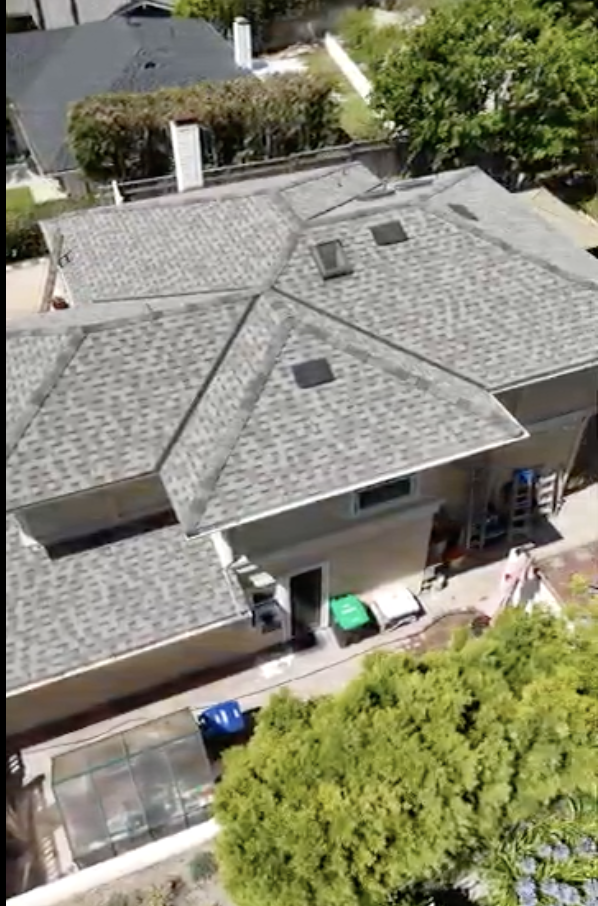
The single most consequential roofing question most Fullerton homeowners face is not which material to choose or which contractor to hire. It is the question that precedes all of those decisions: Is it actually time to replace my roof? Getting this answer right protects you from two different but equally costly mistakes — replacing a roof that had meaningful life remaining and spending money you did not need to spend, or continuing to patch and repair a roof that needed replacement years ago while water damage accumulates invisibly in your attic, insulation, and framing.
In Fullerton’s diverse housing market — where the roofing decisions facing a 1928 craftsman bungalow near Downtown differ dramatically from those facing a 1985 concrete tile ranch home in Central Fullerton or a 1970s custom estate in Sunny Hills — the timing question requires specific, property-contextualized answers rather than the generic “roofs last 20–25 years” guidance that circulates widely but applies accurately to almost no individual property.
We are Cali Roofing Solutions — a family-owned GAF Master Elite®️ and CertainTeed SELECT ShingleMaster™️ Premier certified roofing contractor based in Corona, CA, serving Fullerton and all of Orange County and greater Los Angeles. We back every project with a 30-Year Labor Warranty and 50-Year Material Warranty. We give Fullerton homeowners honest replacement timing guidance — including the honest assessment that repair rather than replacement is the right answer when the facts support it. This guide gives you the framework to make that determination for your specific property.
Why Replacement Timing Matters More Than Most Fullerton Homeowners Realize
The financial stakes of replacement timing decisions in Fullerton are higher than most homeowners recognize — on both sides of the decision.
The cost of replacing too early: A Fullerton homeowner who replaces a roof with 8–10 years of remaining useful life — based on cosmetic concerns, a contractor recommendation that was not grounded in thorough inspection, or anxiety triggered by a neighbor’s roof replacement — spends $15,000–$28,000 that could have been deferred without consequence for nearly a decade. The foregone investment return on that capital — and the replacement roof’s timing relative to any planned home sale — may make the decision financially significant in ways that are not immediately obvious at the time of commitment.
The cost of replacing too late: A Fullerton homeowner who continues repairing a roof past its functional replacement point — through successive patch and repair interventions that each address the visible symptom without resolving the underlying system failure — typically accumulates repair costs approaching or exceeding 40–60% of full replacement cost while simultaneously allowing water intrusion to damage insulation, framing, and in cases of extended water penetration, interior finishes and structural components. The deferred replacement cost is compounded by the remediation cost of accumulated secondary damage — and the emergency replacement premium that comes from acting under duress rather than on a homeowner-controlled schedule.
The optimal outcome is replacement at the right time — after the roof has delivered its functional value and before the failure creates secondary damage — on a schedule the homeowner controls, with a contractor of their choosing, at standard project pricing rather than emergency rates.
Understanding Roofing Lifespan in Fullerton’s Specific Climate
Generic roofing lifespan figures — the “20–25 years for asphalt shingles” and “40–50 years for concrete tile” numbers that appear in most consumer roofing guidance — are derived from testing and performance data that assumes average conditions across a range of climates. Fullerton’s specific climate conditions produce lifespan outcomes that diverge meaningfully from these averages in ways that affect replacement timing decisions.
Asphalt Shingle Lifespan in Fullerton
Standard three-tab asphalt shingles have a generic rated lifespan of 20–25 years. In Fullerton’s thermal environment — summer afternoon temperatures regularly reaching 95–105°F producing roof surface temperatures of 155–180°F on dark shingle products — actual functional lifespan for standard products runs 18–22 years. Premium architectural shingles like GAF Timberline HDZ and CertainTeed Landmark PRO, with their enhanced binder formulations and higher initial granule density, extend functional lifespan to approximately 28–35 years in Fullerton’s conditions when installed with proper attic ventilation.
The ventilation variable is particularly significant in Fullerton. Attics with inadequate ventilation in Fullerton’s climate regularly reach 155–175°F on summer afternoons — degrading shingles from below at a rate that can compress a 30-year rated shingle’s lifespan to 20–22 years. Well-ventilated attics reduce summer attic temperatures by 30–50°F and produce the upper end of the lifespan range. This means that two Fullerton homes with identical shingle products installed the same year can have remaining useful life estimates that differ by 8–10 years based solely on attic ventilation performance — a variable that a professional inspection can assess and that remediation during reroofing can address.
Concrete Tile Lifespan in Fullerton
Concrete tile carries a generic 40–50 year surface lifespan — but the roofing system’s functional lifespan is determined by the underlayment beneath the tile, not the tile itself. Type 30 felt paper underlayment — used beneath virtually all concrete tile installations in Fullerton before approximately 2005 — has a rated lifespan of 20–25 years in Southern California’s climate. This means that a Fullerton concrete tile installation from 1988 has tiles that may have 15+ years of remaining surface life and underlayment that has been expired for approximately 13–18 years.
The practical lifespan framework for Fullerton concrete tile in 2026: the replacement decision is driven by underlayment age rather than tile surface condition for the vast majority of Fullerton’s tile-roofed housing stock. A tile roof installed before 2000 that has not had a professional inspection confirming underlayment condition should be treated as a priority inspection item — not because the tiles look bad, but because the underlayment’s condition cannot be assessed without professional inspection and the probability of underlayment failure at this age is statistically high.
Clay Tile Lifespan in Fullerton
Quality clay tile carries a genuine 50–75+ year surface lifespan in Fullerton’s climate — the most durable of any widely available residential roofing product. As with concrete tile, the replacement decision is driven by underlayment condition rather than tile surface lifespan. Premium synthetic underlayment installed beneath clay tile in more recent installations carries 25–50 year rated lifespans that approach the tile’s own service life — meaning that a clay tile installation on a premium synthetic underlayment from 2005 has both surface material and underlayment with 30+ years of remaining life in most cases.
Wood Shake Lifespan in Fullerton
Original wood shake roofing — present on some of Fullerton’s historic homes that have not been reroofed since the 1970s or earlier — has a functional lifespan of 20–30 years in Southern California’s UV-intense climate. Any Fullerton home with original or early-replacement wood shake roofing should be treated as an immediate professional inspection priority — wood shake past its lifespan in Southern California’s climate creates fire risk in addition to water intrusion risk, and the combination of fire code and functional performance considerations makes timely replacement particularly important.
The Repair-Versus-Replace Decision Framework for Fullerton Homeowners
The repair-versus-replace decision is the most consequential roofing judgment a Fullerton homeowner makes — and it is the decision where the quality and honesty of professional guidance matters most. Here is the framework that produces consistently accurate guidance when applied to Fullerton properties.
Repair Is Almost Always the Right Answer When:
- The roofing system is less than 15 years old and the damage is clearly isolated to a specific, definable area with a single identifiable cause — one wind event, one branch impact, one pipe boot seal failure — rather than distributed across multiple areas of the roof
- A professional inspection confirms that the underlayment, decking, and structural framing in the damaged area are sound and dry — no moisture infiltration beyond the immediately damaged zone
- The repair estimate is less than 25–30% of full replacement cost and addresses the complete source of the problem rather than just its visible symptom
- The repaired roofing section can be visually and functionally integrated with the surrounding existing material — no incompatibility between repair materials and existing product that creates differential performance or appearance issues
- The professional inspector’s remaining useful life estimate for the overall system is 10+ years — meaning the repair investment is being made into a system with sufficient remaining life to justify it
Replacement Is Almost Always the Right Answer When:
- The roofing system is 20+ years old and the damage is distributed across multiple sections or areas — distributed damage indicates systemic aging rather than isolated events, and patching systemic aging produces recurring repair cycles rather than resolution
- The property has had two or more repair calls in the past three years — recurring repairs on the same roof are the clearest signal that the root cause has not been addressed and replacement is overdue
- A professional inspection finds water staining on attic rafters, ridge board, or insulation — indicating that water has been penetrating the roof assembly and accumulating in the structure. The presence of attic-side moisture evidence means the roofing failure has already caused damage, and continuation without replacement allows further accumulation
- The underlayment is confirmed expired through professional inspection — for Fullerton tile roofs, this means any tile installation before 2000 where the underlayment has not been replaced
- The repair estimate approaches or exceeds 40% of replacement cost — at this threshold, the economics of continued patch-and-repair versus full replacement with new warranty coverage almost always favor replacement
- The homeowner is within 18 months of a planned sale — in Fullerton’s residential market, a roof with documented remaining useful life and transferable warranty coverage eliminates the most commonly negotiated inspection credit and supports cleaner transaction outcomes
The Gray Zone: When the Decision Requires Professional Assessment
Between the clear repair and clear replace situations lies a zone where the decision depends on specific inspection findings that require professional assessment to resolve. The most common gray zone scenarios for Fullerton homeowners:
The 15–20 year asphalt shingle roof with localized damage: A Fullerton asphalt shingle roof at 17 years with one section showing significant granule loss and two cracked shingles from a recent wind event. Is this isolated damage on a system with remaining life, or a harbinger of broader system failure that warrants replacement? The answer depends on granule retention across the broader roof, attic ventilation performance, the condition of other roof components, and whether the isolated visible damage reflects the overall system condition or is genuinely isolated. Professional inspection resolves this — visual assessment from the ground does not.
The 25-year concrete tile roof with intact tiles but unknown underlayment status: A Fullerton homeowner whose tile roof looks fine from the street but whose home was built in 1999 and has never had a professional inspection. Is the underlayment still functional? The probability of significant underlayment degradation at this age is high, but not certain — the specific product installed, the installation quality, and the thermal and moisture cycling history of this specific roof all affect actual condition. Only attic examination and professional assessment can resolve this — and the cost of a professional inspection to answer the question is trivially small compared to the cost of a wrong decision in either direction.
The post-Santa Ana damage assessment on an older Fullerton home: A significant Santa Ana event has produced visible damage on an older Fullerton home — several lifted ridge cap shingles and one area of displaced tile. Is this a repairable event on a fundamentally sound system, or did the wind event simply reveal pre-existing conditions that made replacement appropriate before the storm? The distinction determines whether the homeowner’s path is targeted repair, insurance claim, or full replacement — and it requires professional assessment to make accurately.
The Warning Signs Fullerton Homeowners Can Assess Themselves
While professional inspection is the only reliable basis for a replacement decision, several observable conditions that Fullerton homeowners can assess from the ground or from accessible vantage points provide meaningful preliminary information.
From Ground Level With Binoculars
- Shingle cupping or curling at edges: Shingles that lift at edges rather than lying flat indicate moisture differential through the shingle body — typically a sign of inadequate attic ventilation and advanced shingle aging. This is a replacement indicator, not a repair indicator.
- Visible granule loss creating darker patches on asphalt shingle sections: Areas where the dark asphalt mat is visible through depleted granule coverage indicate advanced aging in those sections. If visible from the ground, the granule loss is significant.
- Missing, cracked, or displaced tiles: Individual tile failures are repairable on otherwise sound systems. Multiple displaced tiles across different areas suggest wind fastening failure — a systemic condition that warrants professional assessment of the full fastening system rather than individual tile repair.
- White powdery deposits on tile surfaces (efflorescence): Indicates water is cycling through the tile matrix — a sign of underlayment compromise that warrants professional assessment.
- Sagging roofline or visible ridge deflection: Any visible departure from a straight ridgeline or planar roof surface indicates structural involvement that requires immediate professional assessment — not a scheduled inspection but an urgent one.
From Gutter Discharge and Downspout Areas
- Heavy granule accumulation in gutters or at downspout terminations after rain: Some granule loss is normal throughout an asphalt shingle’s life. Heavy accumulation — particularly if recent rains are producing noticeably increased gutter grit — signals accelerated granule loss that indicates the shingles are entering end-of-life territory.
- Discolored water discharge from downspouts during first rain of season: Heavy coloring or sediment in early-season runoff can indicate significant organic debris accumulation in valleys and gutters — a maintenance indicator rather than a replacement indicator, but one worth investigating.
From Inside the Home
- Water stains on ceilings or walls — even faint, old-looking ones: Any ceiling or wall water stain indicates that water reached interior surfaces at some point. The stain’s age does not indicate that the problem has resolved — only professional inspection from the roof surface and attic can determine current status.
- Musty odor from attic space: Even without visible staining on interior ceilings, musty odor from the attic indicates elevated moisture that may reflect roof assembly water intrusion, inadequate ventilation, or both.
- Visible daylight in the attic from the roof assembly: Any daylight visible through the roof deck in an attic inspection indicates a gap in the roofing assembly that allows both light and water entry — an immediate inspection priority regardless of the roof’s age or apparent exterior condition.
Timing Your Fullerton Roof Replacement: Strategic Considerations
Once the replacement decision is made, the timing of project execution affects both cost and outcome in ways worth understanding before scheduling.
Seasonal Timing in Fullerton
Fullerton’s climate — with its relatively mild winters and dry summers — creates roofing installation conditions that are generally workable year-round, without the cold-weather installation constraints that affect northern California roofing. However, several seasonal considerations affect optimal project timing:
- Before the rainy season (September–November): The highest priority timing window for Fullerton homeowners with roofing systems known to be at or past end of life. Completing replacement before the first significant rains of the season eliminates the water intrusion risk that has been accumulating and avoids the emergency replacement premium that active-leak situations produce
- Spring (March–May): The most comfortable installation conditions — moderate temperatures, low precipitation probability, and contractor availability that is typically better than the post-storm demand spikes that occur after significant Santa Ana or rainy season events
- Summer (June–August): Workable from a precipitation standpoint but the hottest installation conditions for crews — quality contractors manage summer installation carefully, but extreme heat days may affect scheduling on the hottest weeks of July and August
- Avoid scheduling immediately after major Santa Ana events: Post-storm demand spikes that affect contractor availability and can introduce the pressure-decision dynamics that lead to contractor selection mistakes. If a Santa Ana event produces damage requiring attention, temporary tarping provides protection while taking the time needed to select a contractor properly
Coordinating With Other Major Home Improvements
For Fullerton homeowners planning other significant home improvements — kitchen and bath renovations, HVAC replacement, solar installation, or exterior painting — coordinating roofing replacement with these projects can produce meaningful cost savings and better outcomes than executing them independently on separate timelines.
Roofing replacement before solar installation eliminates the panel removal cost that would be required if roofing is replaced after panels are installed. Roofing replacement before exterior painting ensures that fascia and trim painting covers fresh rather than weathered surfaces and coordinates color selection across the complete exterior envelope. HVAC replacement coordinated with roofing allows new roof penetrations for updated mechanical systems to be integrated into the new roofing assembly rather than penetrating an existing one — the cleanest and most waterproof approach.
Timing Relative to Planned Home Sale
For Fullerton homeowners planning to sell within 24 months, the pre-listing roof replacement calculation requires specific financial analysis rather than assumption. The question is not simply whether a new roof adds value — it almost always does in Fullerton’s market, where buyer due diligence consistently flags roofing age and condition. The question is whether the value addition from a new roof exceeds the replacement cost plus the carrying cost of the project.
The calculation is usually favorable for Fullerton homeowners whose roofing is within 5 years of end of life. At that stage, a buyer’s inspector will flag the roof’s condition, the buyer’s agent will request a credit, and the seller’s negotiating position around that credit is weak. A seller who completes the replacement before listing eliminates that negotiation point, supports a faster transaction by removing a common inspection contingency, and can include “new roof — 30-year labor warranty” in listing marketing — a concrete, documented attribute that Fullerton buyers and their agents recognize as meaningful.
Schedule Your Free Fullerton Roof Assessment
Cali Roofing Solutions provides free professional roof inspections and replacement timing assessments throughout Fullerton. Our assessments are specifically designed to answer the timing question honestly — giving Fullerton homeowners the professional, factual basis for a replacement decision rather than a sales-motivated recommendation toward whichever outcome produces the larger project.
We serve all of Fullerton — including Historic Downtown Fullerton, Sunny Hills, North Fullerton, Central Fullerton, East Fullerton near Brea, the CSUF area, Orangethorpe corridor, and all of Fullerton’s established and newer neighborhoods — as well as all of Orange County and greater Los Angeles.
- GAF Master Elite®️ Contractor — top 3% of roofing contractors in the United States
- CertainTeed SELECT ShingleMaster™️ Premier Contractor
- 30-Year Labor Warranty on every project
- 50-Year Material Warranty on every project
- Complete City of Fullerton permit management on every project
- Honest repair-versus-replace guidance — we recommend repair when repair is right
- Remaining useful life estimates documented in writing with every inspection
- Licensed, insured employees — no unlicensed subcontractors, ever
- Honest assessments — we will never recommend work you do not need
📞 Call (951) 743-1437 or visit caliroofingsolutions.com to schedule your free Fullerton roof assessment today. Proudly serving Fullerton and all of Orange County and greater Los Angeles.
Leave a Reply