
.
Concrete and clay tile roofing defines the visual identity of Orange County. Drive through Anaheim, Santa Ana, Yorba Linda, Fullerton, Mission Viejo, Laguna Niguel, Newport Beach, Irvine, or Rancho Santa Margarita and the overwhelming majority of homes you pass have some form of tile roofing overhead. It is the architectural signature of Southern California — and for good reason. Tile roofs last 40 to 75+ years, carry Class A fire ratings, withstand Southern California’s UV-intense climate better than almost any other material, and add genuine curb appeal and resale value to OC properties.
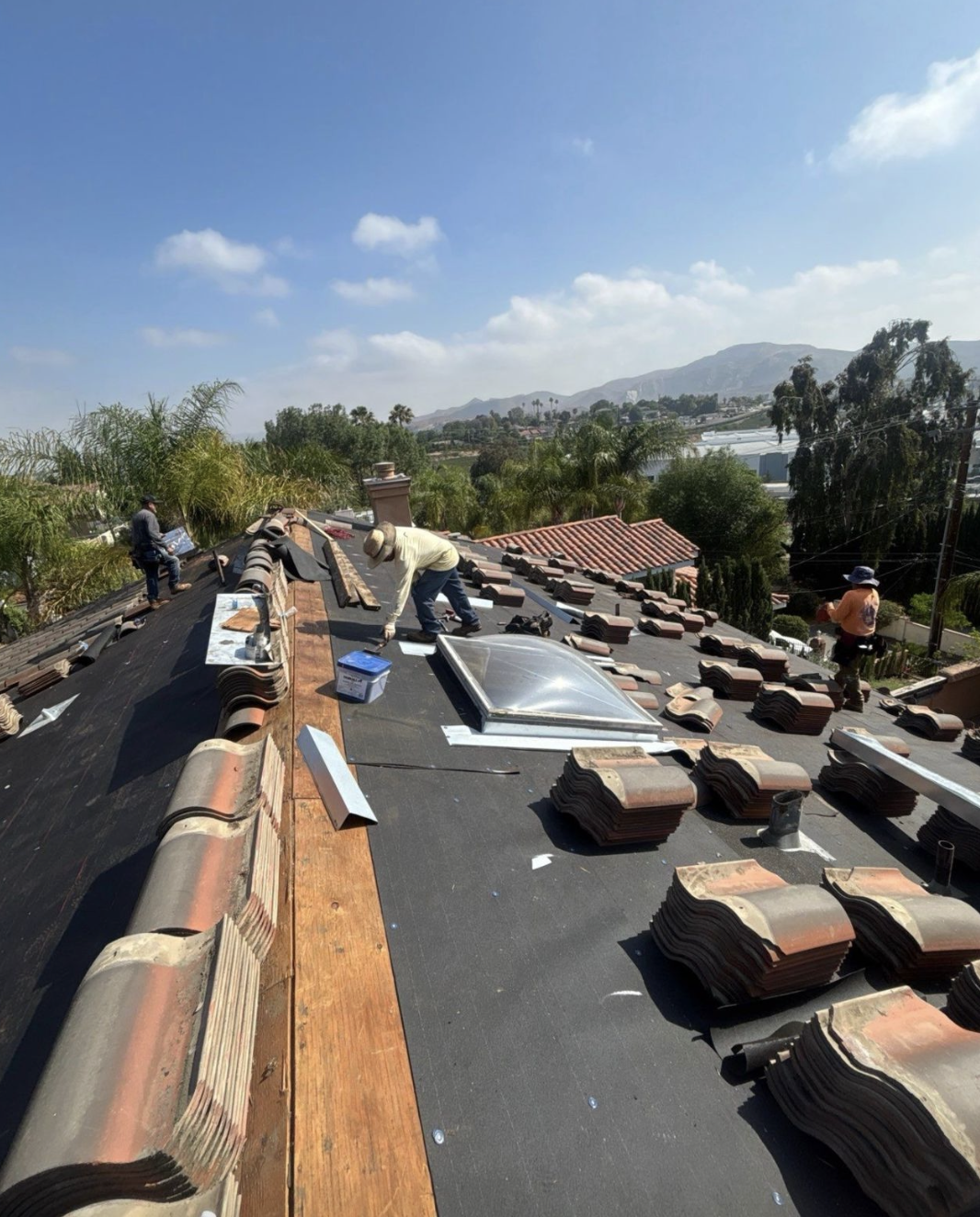
But tile roofing is also one of the most misunderstood roofing systems in Orange County. Most homeowners assume that because their tiles look intact, their roof is performing properly. That assumption costs OC homeowners thousands of dollars every year in preventable water damage — because the tile is not the roof. The underlayment beneath the tile is the roof. And on tens of thousands of OC homes built between 1975 and 2000, that underlayment has failed or is actively failing right now.
We are Cali Roofing Solutions — a family-owned GAF Master Elite®️ and CertainTeed SELECT ShingleMaster™️ Premier certified roofing contractor based in Corona, CA, serving all of Orange County and greater Los Angeles. We have inspected and replaced hundreds of tile roofs across OC. This guide covers everything tile roof owners in Orange County need to know to protect their investment in 2026.
Understanding Your Tile Roof System: The 4 Components That Actually Matter
Most OC homeowners think of their tile roof as one thing — the tiles they can see from the street. In reality, a tile roof is a system of four interdependent components, each with its own lifespan and maintenance requirements. Understanding this system is the foundation of effective tile roof ownership.
1. The Tile Surface Layer
The concrete or clay tiles themselves are the most durable component of the system. Properly manufactured concrete tile has a rated lifespan of 40–50 years in Southern California’s climate. Quality clay tile lasts 50–75+ years. The tiles provide the primary defense against UV radiation, resist wind-driven debris, and shed water toward the eaves.
What the tiles do not do — and this is the critical point most homeowners miss — is provide waterproofing. Tiles are designed to shed the majority of rainfall, but they are not a watertight membrane. Water does penetrate beneath tiles during heavy rain, wind-driven events, and when tiles are cracked or displaced. The waterproofing function belongs entirely to the underlayment layer below.
2. The Underlayment
The underlayment is the actual waterproof membrane of your tile roof — the layer that prevents water that gets past the tiles from entering your home. On the vast majority of OC tile roofs installed before approximately 2005, this underlayment is Type 30 felt paper — a petroleum-based product with a rated service life of 20–25 years in Southern California’s climate.
Here is the problem that affects tens of thousands of OC homeowners right now: a tile roof installed in 1990 has tiles that look perfectly intact and a felt underlayment that reached end of life in 2010–2015. That roof has been waterproofing your home on luck for the past decade. The tiles look fine. The underlayment is not.
Modern synthetic underlayments used in re-roofing projects today carry 25–50 year rated lifespans, are significantly more resistant to UV degradation, and dramatically outperform the original felt paper products in waterproofing performance. A tile underlayment replacement — retiling the roof with the existing tiles or new tiles over a new synthetic underlayment — is the most common major maintenance project on OC tile roofs in 2026.
3. The Flashing System
Metal flashing at chimneys, skylights, valleys, walls, and roof penetrations creates the watertight transitions between your tile field and every element that penetrates or interrupts it. Flashing is typically galvanized steel or aluminum, installed with roofing caulk and mechanical fasteners, and has a service life that varies significantly with exposure and installation quality.
In coastal OC communities — Newport Beach, Laguna Beach, Huntington Beach, Dana Point — salt air corrosion accelerates galvanized steel flashing degradation significantly. Homes within a mile of the ocean should use stainless steel or copper flashing for maximum durability. On inland OC homes, galvanized flashing typically lasts 20–30 years before corrosion compromises its sealing performance.
4. The Hip and Ridge System
Hip and ridge tiles close the roof at its peaks and angled transitions. On older OC tile roofs, these are typically set in mortar — a calcium-based material that shrinks, cracks, and fails over time as it cycles through heating and cooling. Failed hip and ridge mortar is one of the most common entry points for water intrusion on OC tile roofs and one of the most commonly missed items in cursory inspections.
Modern best practice replaces mortar-set hip and ridge systems with mechanically fastened ridge tile on foam closure — significantly more durable, wind-resistant, and maintenance-free than traditional mortar. If your tile roof was installed before 2000 and has not had the hip and ridge system addressed, it is worth a professional assessment.
The Tile Roof Maintenance Calendar for Orange County Homeowners
Tile roofs require less frequent maintenance than asphalt shingle systems — but the maintenance they do require is specific, important, and different from what most OC homeowners expect. Here is a practical maintenance calendar:
Leave a Reply