
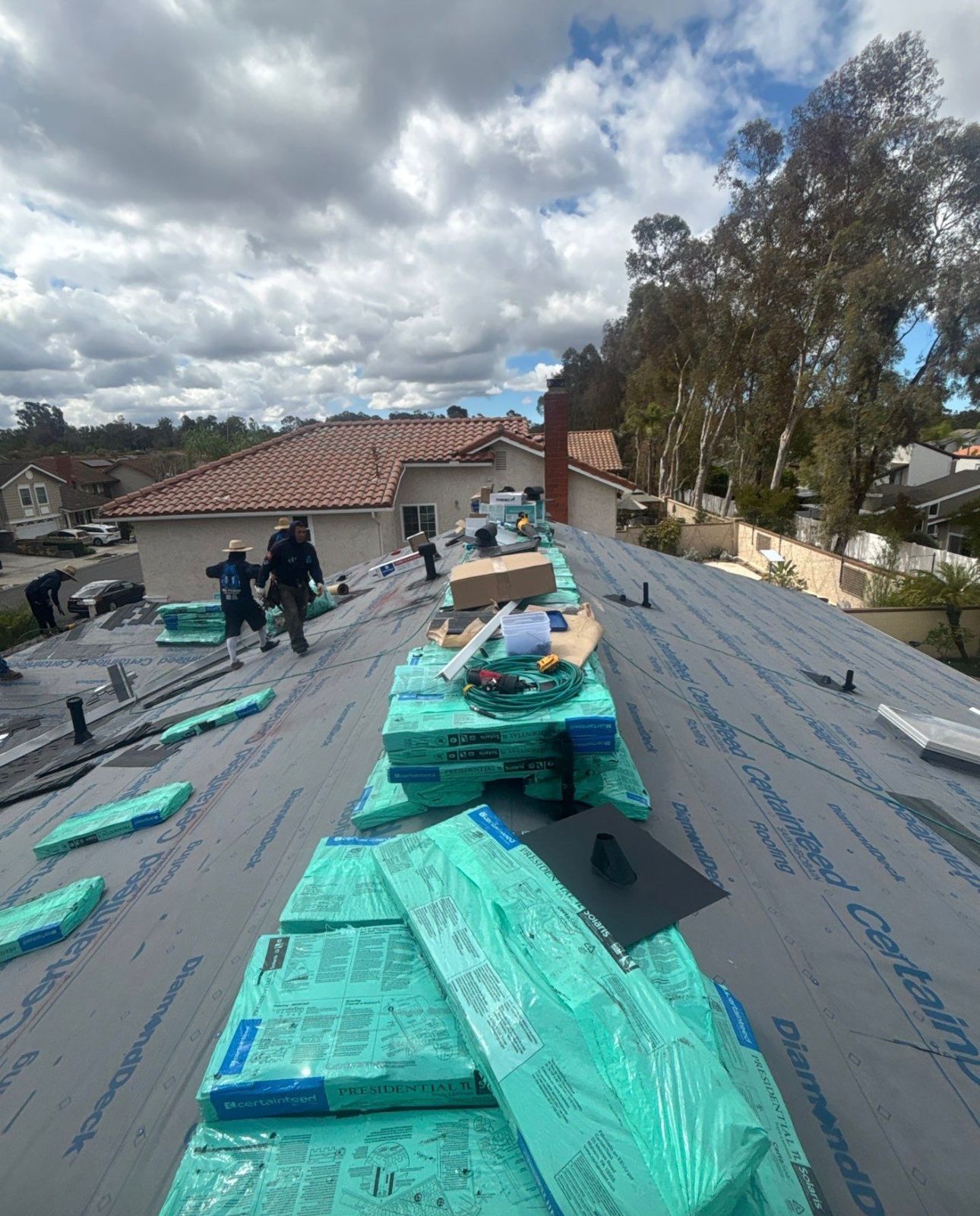
Every Orange County homeowner knows the feeling. The air turns dry and hot. The sky takes on that particular hazy amber tone. Your windows rattle at 2 AM. The Santa Ana winds have arrived — and somewhere across Anaheim Hills, Yorba Linda, Laguna Hills, Trabuco Canyon, Fullerton, Huntington Beach, Newport Beach, Costa Mesa, Irvine, or Mission Viejo, roofs are taking a beating right now.
Santa Ana wind events are one of the most significant and underappreciated threats to residential roofing in Orange County. They are not dramatic or photogenic the way wildfires are. The damage they cause is often invisible from the ground. And by the time that damage becomes a visible interior leak — sometimes months or even a full rainy season later — the cost of repair has compounded significantly.
We are Cali Roofing Solutions — a family-owned GAF Master Elite®️ and CertainTeed SELECT ShingleMaster™️ Premier certified roofing contractor based in Corona, CA, serving all of Orange County and greater Los Angeles. We inspect and repair wind-damaged roofs across OC after every major Santa Ana event. This post covers everything Orange County homeowners need to know about Santa Ana winds and their roofs in 2026.
Why Santa Ana Winds Are a Different Kind of Roofing Threat
Most roofing damage across the country comes from rain, snow, hail, and freeze-thaw cycles. Orange County has essentially none of those. What we have instead are Santa Ana wind events — and they stress roofing systems in ways that our climate otherwise does not.
Santa Ana winds are offshore wind events driven by high-pressure systems building over the Great Basin and channeled through mountain passes into Southern California. They are characterized by three conditions that combine to create a uniquely damaging roofing environment:
Extreme velocity. Santa Ana gusts regularly exceed 50–60 mph across most of Orange County, and in channeled canyons and hillside communities — Anaheim Hills, Trabuco Canyon, Laguna Hills, Silverado Canyon, and portions of Yorba Linda — gusts frequently reach 80–100+ mph during major events. These velocities exceed the design wind load of standard roofing installations and can overcome sealant strips, lift ridge caps, and separate flashing that appeared fully adhered beforehand.
Extreme dryness. Santa Ana conditions drive relative humidity down to 5–15% — sometimes lower. Asphalt shingles that have lost granule coverage become brittle under these conditions, cracking and fracturing under wind stress in ways they would not during a more humid event at the same velocity. Caulked flashings and pipe boot seals dried out from years of Southern California sun become rigid and lose their seal during Santa Ana events.
Sustained duration. Unlike thunderstorm wind events that last minutes, Santa Ana events can sustain damaging wind speeds for 12, 24, or 48+ consecutive hours. The cumulative fatigue on roofing fasteners, sealants, and adhesive strips over an extended high-wind event is fundamentally different from a brief high-velocity gust.
The 7 Most Common Types of Santa Ana Wind Roof Damage on OC Homes
1. Lifted and Separated Shingles
The most common Santa Ana wind damage pattern on asphalt shingle roofs across Orange County. High winds get beneath shingle edges — particularly at the eaves, rakes, and ridge — and overcome the manufacturer’s sealant strip that bonds each course to the course below. Once the sealant bond breaks, the shingle lifts, exposing the underlying course and creating immediate vulnerability to water intrusion during the next rain event. Separated shingles are often invisible from the ground but clearly visible during a roof surface inspection.
2. Lost or Damaged Ridge Cap Shingles
Ridge caps are the highest-exposure roofing component on any home — installed at the very peak where wind forces are greatest and where both roof slopes create an upwelling effect during high-wind events. Ridge cap shingles that are improperly nailed, under-nailed, or simply at the end of their adhesive life are routinely blown off during Santa Ana events across OC. Missing ridge caps leave the roof deck fully exposed at the peak — the most critical point on the entire roof system.
3. Flashing Separation at Chimneys, Skylights, and Walls
Metal flashing at chimneys, skylights, dormers, and wall-to-roof junctions is mechanically fastened and sealed with roofing caulk or storm collar boots. Sustained Santa Ana wind pressure against vertical surfaces — chimneys and walls in particular — creates a prying force on counter flashing and step flashing that can separate it from the surface it is sealed against. A flashing separation of even a few millimeters creates a water entry point that may not produce a visible interior leak until the rainy season arrives months later.
4. Blown Debris Impact Damage
Santa Ana conditions routinely bring airborne debris — tree branches, palm fronds, construction materials, patio furniture, and in severe events, larger objects — into contact with roof surfaces across OC neighborhoods. Impact damage can crack or displace concrete and clay tiles, punch through asphalt shingles, and damage or displace pipe boot flashing around roof penetrations. Any impact hard enough to displace a tile or penetrate a shingle creates an immediate water entry point.
5. Cracked and Displaced Concrete and Clay Tile
Concrete and clay tile roofs — the dominant roofing type across Orange County’s Spanish Colonial and Mediterranean architecture — are generally more wind-resistant than asphalt shingles due to their weight and mechanical fastening. However, tiles that have been previously cracked by thermal cycling, that have lost their point mortar at hips and ridges, or that were improperly installed are vulnerable to wind displacement during major Santa Ana events. Hip and ridge tile held by point mortar rather than mechanical fasteners is particularly susceptible.
6. Pipe Boot and Vent Seal Failures
Rubber pipe boot seals around plumbing vents and HVAC penetrations have a 10–15 year functional lifespan in Southern California’s UV-intense environment. When these rubber gaskets are already dried, cracked, and near end of life, the sustained flexing that occurs during a 24–48 hour Santa Ana wind event accelerates their failure significantly. A pipe boot that was marginally functional before a wind event may be fully separated and open to water intrusion after it. This is one of the most commonly missed wind damage findings on post-Santa Ana roof inspections.
7. Gutter Damage and Displacement
Gutters and downspouts are vulnerable to Santa Ana wind debris and direct wind pressure — particularly on homes with larger gutter profiles or aging hangers. Displaced gutters can pull fascia boards with them, exposing roof decking at the eave line. Bent or disconnected downspouts that fail during the subsequent rainy season create water intrusion at the foundation and eave that is often misattributed to roof failure rather than drainage failure.
The Critical Window: Why Post-Santa Ana Roof Inspections Matter
One of the most common — and costly — mistakes Orange County homeowners make after a major Santa Ana wind event is waiting to schedule a roof inspection until they see a water stain on their ceiling. By the time interior water damage is visible, the roofing damage that caused it has typically been open to the elements for weeks or months, and secondary damage to insulation, framing, and interior finishes has already begun.
The right time to inspect your roof after a Santa Ana event is within 7–14 days of the event — while damage is fresh, documentation is clear, and your insurance claim window is still fully open. Here is why that timeline matters:
Insurance documentation. Homeowners insurance policies require that wind damage claims be filed promptly after the event. An inspection and damage report completed within the first two weeks creates a clear, documented connection between the wind event and the damage — establishing the causation that insurance adjusters require for a covered claim. An inspection performed three months later, after a rainy season has introduced water damage through the compromised areas, creates ambiguity that carriers use to attribute damage to pre-existing conditions rather than the wind event.
Temporary protection. If significant damage is found, temporary protective measures — typically tarping of exposed areas — can be put in place immediately, preventing interior water damage during the subsequent rainy season. Temporary protection measures are typically covered as part of a homeowners insurance claim when installed promptly after a documented wind event.
Contractor availability. After a major Santa Ana event affecting a wide area of Orange County, demand for roofing inspections and emergency repairs spikes dramatically. Homeowners who act quickly secure appointments with established, licensed contractors. Those who wait often find legitimate contractors fully booked — and face pressure to work with the less-qualified door-knockers who appear in OC neighborhoods within 48 hours of every major wind event.
Documenting Wind Damage for an Insurance Claim
If you believe your roof sustained damage during a Santa Ana wind event, the documentation you create in the first 24–72 hours significantly affects your insurance outcome. Here is exactly what to do:
- Photograph everything visible from the ground immediately — missing shingles, lifted ridge caps, debris on the roof, displaced tiles, damaged gutters. Date-stamped photos taken within hours of the event establish the timeline.
- Do not attempt to access the roof yourself. Post-wind-event roofs may have unstable tiles, compromised sheathing, and debris that create serious fall risk. Leave roof surface assessment to a licensed roofing contractor with appropriate safety equipment.
- Contact your insurance carrier to open a claim before making any permanent repairs. Permanent repairs made before insurance authorization can complicate or reduce your claim settlement. Temporary protective measures (tarping) are acceptable and generally covered.
- Schedule a professional inspection immediately — before the insurance adjuster visits. Having a licensed roofing contractor assess and document damage independently gives you an advocate during the adjuster’s visit and ensures the full scope of damage is identified and presented, rather than just what the adjuster chooses to note.
- Request a written inspection report that documents specific findings, photographs, and repair recommendations. This report is your primary evidence in the claims process.
Roofing Materials That Perform Best in Santa Ana Wind Conditions
If you are planning a roof replacement in Orange County in 2026, Santa Ana wind performance should be a primary material selection criterion — particularly for homes in Anaheim Hills, Yorba Linda, Laguna Hills, Trabuco Canyon, the Coto de Caza area, and other high-wind-exposure communities.
High Wind-Rated Architectural Shingles: GAF Timberline HDZ shingles are rated to 130 mph wind resistance when installed with six nails per shingle rather than the standard four — a specification Cali Roofing Solutions uses as standard practice on all OC projects. CertainTeed Landmark PRO carries equivalent wind ratings. These products represent the best wind performance available in the asphalt shingle category and are appropriate for the vast majority of OC homes.
Concrete and Clay Tile: Properly installed and mechanically fastened tile roofing is inherently more wind-resistant than asphalt shingles due to mass and fastening requirements. The critical variable is hip and ridge installation method — mechanically fastened ridge tile dramatically outperforms point mortar in high-wind events. Cali Roofing Solutions installs all hip and ridge tile with mechanical fastening as standard practice.
Standing Seam Metal: The highest wind resistance of any residential roofing product. Concealed fastener standing seam metal systems have no exposed fasteners or adhesive strips to fail under wind stress — the panels are mechanically interlocked and fastened through concealed clips. For OC homeowners in the highest wind-exposure communities, metal roofing eliminates the primary wind failure mechanisms that affect shingle and tile systems. 40–70 year lifespan.
Proactive Wind Damage Prevention: What You Can Do Now
If your roof is in good condition but you want to reduce its vulnerability to the next Santa Ana event, here are the most cost-effective preventive measures:
- Annual roof inspection before Santa Ana season (typically September through March in OC) — identify and repair vulnerable flashing, deteriorated pipe boot seals, and any shingles or tiles that have lost their bond before wind season begins
- Ridge cap inspection and resealing — ridge caps are the highest-risk Santa Ana damage point; confirming they are properly adhered and fastened costs far less than emergency repair and temporary tarping after an event
- Gutter maintenance — clear debris before wind season to prevent gutter displacement from weight and wind load
- Tree trimming — overhanging branches and dead palm fronds within falling distance of your roof should be removed before Santa Ana season; debris impact is one of the most common tile damage mechanisms across OC
- Pipe boot seal inspection — any rubber boot seal over 10 years old on an OC home should be inspected and proactively replaced; the cost is minimal compared to the water damage an open boot seal can cause through a rainy season
Schedule Your Post-Santa Ana Roof Inspection
Cali Roofing Solutions responds quickly to wind damage inspection requests throughout all of Orange County after every major Santa Ana event. We provide written inspection reports documenting all findings with photographs — the documentation you need for an insurance claim, a repair estimate, or simply peace of mind going into the rainy season.
We serve Irvine, Anaheim, Huntington Beach, Newport Beach, Fullerton, Costa Mesa, Laguna Beach, Santa Ana, Yorba Linda, Mission Viejo, Laguna Niguel, Rancho Santa Margarita, Anaheim Hills, Coto de Caza, the City of Orange, Garden Grove, Westminster, Fountain Valley, Dana Point, and Rowland Heights.
- GAF Master Elite®️ Contractor — top 3% of roofing contractors in the United States
- CertainTeed SELECT ShingleMaster™️ Premier Contractor
- 30-Year Labor Warranty on every project
- 50-Year Material Warranty on every project
- Full permitting handled on every job — no exceptions
- Licensed, insured employees — no unlicensed subcontractors, ever
- Honest assessments — we will never recommend work you do not need
📞 Call (951) 743-1437 or visit caliroofingsolutions.com to schedule your inspection today. Proudly serving all of Orange County and greater Los Angeles.
Leave a Reply